
What If We Had Always Been Invested In?
Imagine if Black, Brown and rural communities had always received equal investment. The wealth gap would look very different Community wealth models can help get us there.

Imagine an America where underinvestment never existed — where Black, Brown, and rural communities had always received the same attention, infrastructure, and opportunity as affluent suburbs.
What would our neighborhoods look like?
What would our GDP be?
How many innovations, companies, and works of art would we have created?
The Cost of Underinvestment
To understand what we lost, look at what we have.
In 2022, the average White family held six times the wealth of the average Black family and five times that of the average Hispanic family.
Median wealth for White families was $287,000, compared with $45,000 for Black families and $61,000 for Hispanic families.
These gaps are not accidental. They’re the result of policies that stripped wealth from Black families while facilitating wealth building among White ones.
They represent decades — even centuries — of compounding underinvestment.
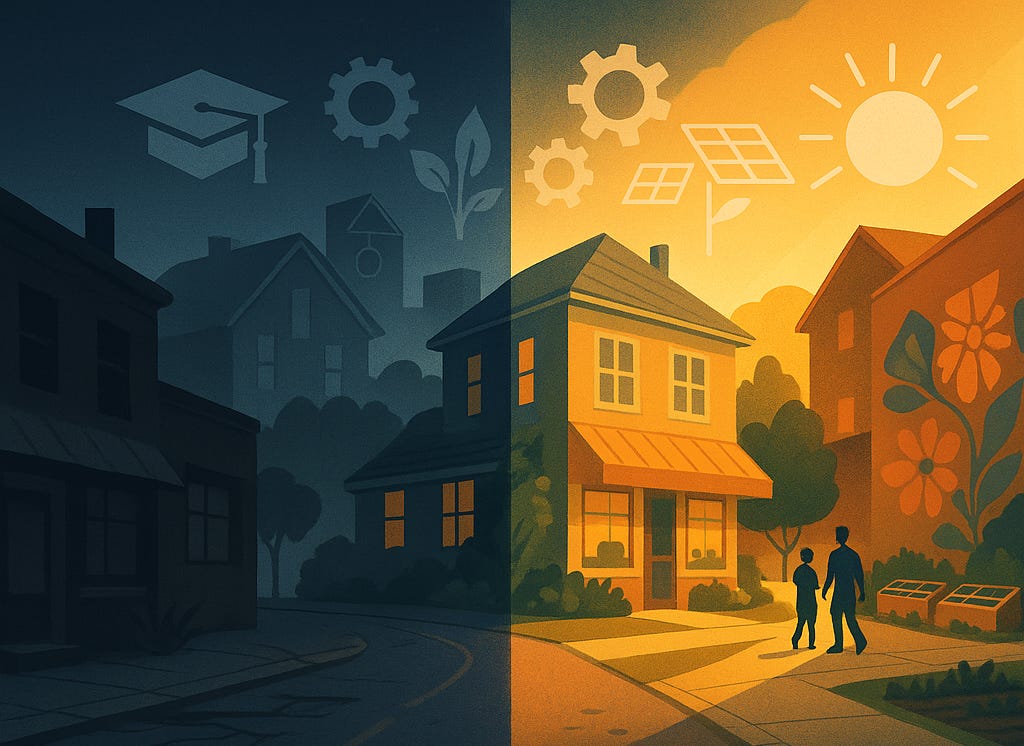
Reimagining the America That Could Have Been
Now, flip the script.
Imagine a nation where every Black child grew up with access to:
Safe housing
Quality education
Nutritious food
Reliable broadband
Imagine Black founders receiving the same level of venture capital as their White counterparts.
Imagine infrastructure spending that prioritized forgotten towns as much as it did suburban expansion.
The economic impact would be staggering:
more businesses, more jobs, more innovation, more tax revenue.
And the social impact?
Healthier families, stronger communities, and a deeper sense of shared prosperity.
A Glimpse of What’s Possible
Community wealth-building models offer a preview of this future.
When residents own a share of local assets:
Jobs stay anchored.
Public services expand.
Economic stability improves.
The Urban Institute highlights new investment models that make ownership more accessible to those historically excluded from capital markets.
And cities like Philadelphia, through initiatives like CityStart, are crafting financial empowerment blueprints to close racial wealth gaps and rebuild trust.
The Point Isn’t Nostalgia — It’s Action
We can’t rewrite history. But we can change the future.
By investing in undercapitalized communities, expanding community ownership models, and addressing financial trauma, we can begin to create the world we should have had all along.
Call to Action
Ask yourself:
What would your neighborhood look like if it had always been invested in?
What role can you play in making that vision a reality?
Share this vision.
Join The Wealth Salons to collaborate on projects that turn imagination into action.
Join the conversation. Share this post with someone who needs to hear it, and connect with The Wealth Salons to learn how you can help build wealth in The Great 38. Let’s co-create a future where every community has the tools to thrive.
Ready to build with us?
Whether you’re a founder, operator, or advisor—if you’re brilliant and ready to execute, we want to hear from you.
Stay Connected
Follow us for more insights, founder stories, and new opportunities:
🔗 LinkedIn | 𝕏 X | 📸 Instagram | 📬 Newsletter