



Most conversations about wealth begin in the wrong place.
They begin with accumulation. How much? How fast? Through which vehicle. With which advisors in which market windows.
Those are real questions. But they are the second set of questions.
The first set is harder.
What is wealth supposed to make possible?
Not comfortable. Not impressive. Not protected. What is it supposed to make possible?
That distinction — between having and designing — is what The Wealth Salons were built to hold.
Wealth Without Architecture Is Just Accumulation
There is nothing wrong with accumulation as a phase. Most people building wealth are in a survival and growth period — protecting what exists, compounding what works, staying solvent through the variables that keep arriving.
But at some point, accumulation without intention becomes a liability of its own kind.
You can have significant assets and still have a wealth design problem.
The problem shows up in different forms: inherited wealth with no governance architecture around it. A liquidity event with no stewardship framework. A portfolio that does not reflect the values that built it. A family that has not had the conversation yet. An institution being built by someone whose capital is not aligned to their public commitments.
These are not scarcity problems. They are design problems.
And design problems require different tools than scarcity problems do.
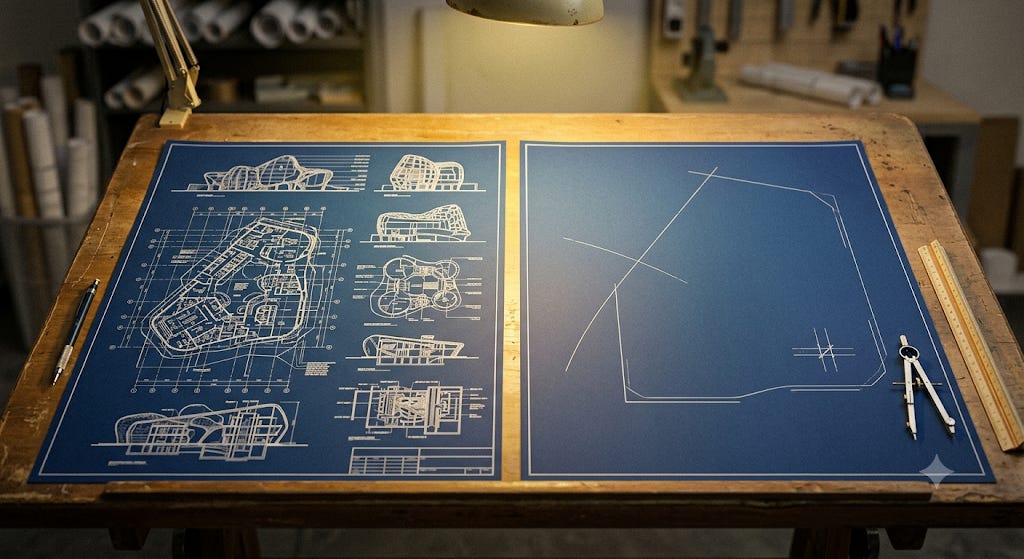
What “Design” Actually Means Here
Design, in this context, is not aesthetic. It is not a financial product. It is not another optimization layer.
Design is the set of intentional decisions about what your wealth is for.
Who does it protect?
What does it build?
What values does it express when it moves?
What does it preserve across time — across generations, across market cycles, across the moments when everything else is uncertain?
Behavioral economists have documented for decades that people treat money differently depending on what they believe it is for. A dollar earmarked for education behaves differently in the mind than a dollar sitting in a general account — even when the amount is identical.
That is not irrationality. That is architecture.
The salons exist because we believe that architecture deserves to be deliberate, not accidental.
Why This Conversation Has to Happen in a Room
There is a specific reason The Wealth Salons are rooms and not platforms.
Platforms are built for broadcast. They reward confident declarations, polished frameworks, and answers delivered with authority.
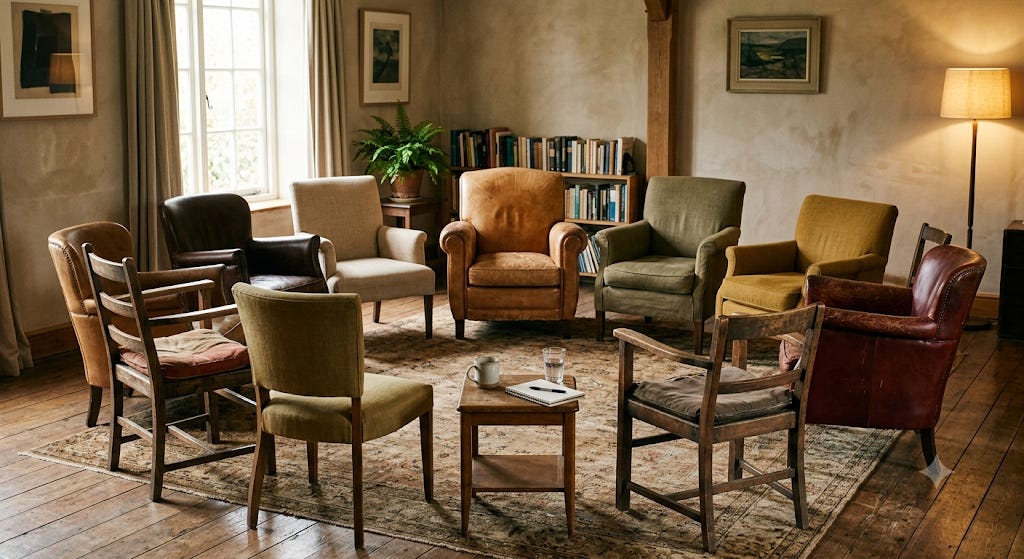
Rooms are built for the other thing — for the questions we do not ask publicly, the fears we have not named yet, the decisions we are making while uncertain, the comparisons we only make honestly when we trust the people in the room.
Most women who have built meaningful wealth have had almost no access to honest conversation about what to do with it.
Not because good advisors do not exist. But because the conversation most advisors are trained to have is about optimization, not about what optimization is in service of.
Research on wealth transfer and family governance consistently shows that the breakdown of intergenerational wealth is rarely a financial failure. It is a communication and governance failure — families that never built the infrastructure to talk about money honestly do not survive the transfer.
The room is not social. The room is structural.
It is where the real design conversation begins.
The Questions That Belong in the Room
There is a particular kind of question that needs a particular kind of container.
These are questions like:
What did I inherit — not just financially, but emotionally — about what wealth means and who deserves it?
What am I afraid my money will do if I do not govern it well?
Who is in the conversation when major decisions get made, and who should be?
Am I building stewardship or am I building a liability for the people who come after me?
What would it mean to use this capital in a way that reflects what I actually believe — not what I am expected to believe?
These are not questions for a conference breakout. They are not questions for a financial planning session. They are not questions designed for public performance.
They are questions for a room where money can be discussed honestly — without pretense, without hierarchy, without the pressure to have already arrived at clarity.
From Access to Stewardship
The language around women and wealth has shifted over the last decade — from access (getting in the room) toward ownership (having capital) toward a conversation that is still forming.
That next conversation is about stewardship.
Stewardship is not a softer version of ownership. It is a more demanding version.
Stewardship asks: what are you responsible for, not just what are you entitled to?
Stewardship asks: how does what you control connect to what you care about?
Stewardship asks: what governance structures exist to ensure your wealth serves its intended purpose — not just during your lifetime, but through the transitions and disruptions that come after?
Research from Fidelity and others has documented the scale of the wealth transfer now underway — trillions of dollars moving across generations, many of them for the first time into the hands of women. The design decisions being made right now — about governance, values, stewardship frameworks, and intended use — will determine what that wealth makes possible.
That is not a planning conversation. That is a design conversation.
And it requires a room built to hold it.
What the Salons Make Possible
The Wealth Salons are not a conference. They are not a network. They are not a self-help circle.
They are infrastructure.
Infrastructure for the honest conversation about wealth that women have been expected to have privately, or not at all.
Infrastructure for the design questions that do not fit in a standard financial planning session.
Infrastructure for the trust that has to exist before capital becomes genuinely useful — not just held.
The work of the salons is to create a room where wealth becomes discussable before it becomes deployable.
Where the design conversation happens before the transaction does.
Where the architecture gets built before the legacy is locked in.
Wealth is a design question.
The Wealth Salons are a room designed to hold that question honestly.
If that is the conversation you are ready to have — request an invitation.